 dazeh5.com
How to Play DONT SPLASH – A Beginner’s Guide to Mastering Precision Balancing
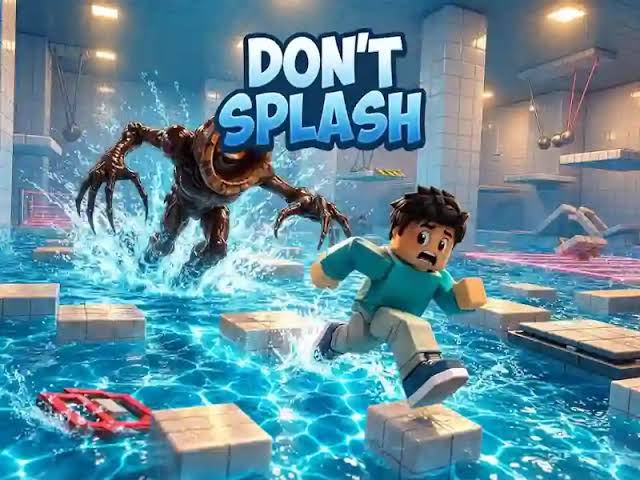
Physics-based arcade and puzzle games have grown immensely popular because they challenge players to combine steady reflexes with calculated environmental manipulation. DONT SPLASH stands out as an addictive, high-tension skill title where your primary objective is to guide fragile objects, clear precarious platforms, and manage fluid equilibrium without triggering catastrophic spills. Unlike traditional action games that reward rapid button mashing, DONT SPLASH demands razor-sharp spatial awareness and patience, making every stage a gripping test of composure.
Although the core rules appear simple during early tutorial stages, many beginners quickly hit progression walls because they rush movements or misjudge momentum transfer. Knowing how to control tilt angles, stabilize liquid containers, and prepare for shifting gravity mechanics can dramatically increase your completion rate. This guide explains how to play DONT SPLASH step by step, covering everything from your very first drop to advanced endgame mastery.
Understanding the Core Gameplay
The foundation of DONT SPLASH is fluid physics management and precision obstacle navigation. Once a stage begins,you take control of platforms, vessels, or balance beams tasked with transporting liquid payloads or delicate items across hazardous gaps. Moving too quickly or tilting sharply causes momentum waves that push water over container edges,resulting in instant stage failure.
Unlike casual arcade games that rely purely on reaction speed, DONT SPLASH rewards deliberate rhythm and restraint.Choosing when to pause movement to let surface ripples settle, which route angles to prioritize, and how to balance speed against stability determines how smoothly your progress continues.
Core Gameplay Loop
- Stabilize your starting vessel and assess environmental hazards.
- Navigate moving platforms, slopes, and narrow bridges carefully.
- Allow liquid momentum to settle before executing sharp turns.
- Deliver the payload intact to the target destination zone.
- Unlock tougher stages and higher precision challenges.
Preparing for Your First Stage
After launching DONT SPLASH, adjust your input sensitivity and enter the opening practice levels. Instead of throwing you straight into chaotic moving machinery, the game introduces basic tilt controls, gentle slopes, and stationary checkpoints. This initial phase lets you familiarize yourself with how fluid reacts to sudden stops and accelerations before facing complex multi-stage gauntlets.
During your first few attempts, avoid rushing toward the finish line to beat stage timers. Spend several minutes observing how quickly liquid waves build up during continuous motion and how slight counter-tilts neutralize dangerous sloshing.
Beginner Tips
- Use micro-adjustments: DONT SPLASH rewards subtle, feathered inputs. Heavy directional holds create violent waves that are nearly impossible to recover from.
- Pause between hazards: Many new players fail early by chaining difficult jumps together without stopping. In most cases, waiting two seconds for waves to flatten prevents accidental spills.
Learning the User Interface
The interface displays clean, minimalist visual telemetry to keep your eyes locked on fluid movement. Important information appears through spill threshold meters, stability gauges, stage progress indicators, and checkpoint markers.Spending time understanding each visual cue early saves costly miscalculations later.
Your main attention should focus on the liquid surface line, container rim proximity, current stability indicators, and upcoming obstacle patterns. These key elements influence nearly every micro-decision throughout a run.
Important UI Elements
- Spill Threshold Meter
- Current Stage Timer
- Checkpoint Progress Bar
- Stability Balance Indicator
- Star Rating Objectives
- Reset Stage Shortcut
Mastering Momentum and Wave Control
Fluid momentum is the single most critical mechanic in DONT SPLASH. Every acceleration creates a wave traveling toward the back of your container, while sudden braking sends that same wave surging forward over the front lip.Understanding this back-and-forth slosh cycle separates struggling beginners from consistent stage finishers.
If liquid begins climbing dangerously close to the rim, avoid slamming the controls in the opposite direction immediately.Instead, match the wave's movement speed briefly to absorb its kinetic energy before gently bringing your vessel back to a level resting state.
Wave Control Priority
- Gentle Acceleration Curves
- Counter-Tilt Absorption
- Surface Settling Pauses
- Center-of-Gravity Alignment
- Rim Clearance Monitoring
- Smooth Braking Transitions
Understanding Environmental Hazards and Obstacles
As you advance through chapters, new mechanical hazards introduce dynamic forces that disrupt your balance. Spinning fans, bouncy bumpers, collapsing bridges, and magnetic fields apply external momentum directly to your payload.Recognizing how each obstacle interacts with fluid physics helps you plan safe approaches.
Static ramps and gentle seesaws generally offer predictable physics once you match their incline angles. Dynamic hazards, such as rhythmic pistons or gusting wind tunnels, require careful timing so you cross during low-turbulence windows.
Common Stage Hazards
- High-Velocity Wind Tunnels
- Oscillating Seesaw Platforms
- Fragile Glass Bridges
- Sudden Drop Chutes
Navigating Narrow Bridges and Steep Slopes
Mid-game progression centers around traversing tight architectural pathways where horizontal room for error disappears.Steep inclines force liquid to pool heavily toward one side of the container, drastically reducing your margin for sudden movements.
When ascending or descending sharp slopes, tilt your vessel slightly to keep the container floor parallel to the horizon rather than matching the ramp angle. Maintaining a level horizon keeps the liquid surface flat even while climbing steep grades.
Slope Navigation Tips
- Keep the container base parallel to the horizon.
- Maintain steady, uninterrupted crawling speeds on narrow beams.
- Avoid sudden stops midway up steep inclines.
- Anticipate slope transitions before reaching the crest.
- Use checkpoint platforms to reset vessel alignment.
Progressing Through Timed Challenge Stages
Later chapters in DONT SPLASH introduce strict countdown timers and moving walls that pressure you into faster execution. Rather than panicking and losing control, treat timed stages as exercises in efficient wave cancellation.Smooth, continuous motion without unnecessary stops always beats frantic sprinting followed by long recovery pauses.
Experimenting with rhythmic rocking techniques can reveal surprisingly fast movement strategies. By timing your forward pushes with the natural return of a liquid wave, you can carry higher speeds while keeping surface turbulence minimal.
When Progress Slows
- Review Your Rhythm: Check whether your accelerations are fighting existing waves or flowing smoothly with the container's natural pendulum motion.
Common Beginner Mistakes to Avoid
One of the biggest mistakes new players make is overcorrecting when a wave threatens to spill. Panicked back-and-forth jerking amplifies wave height exponentially, turning a minor wobble into an immediate stage failure within seconds.
Another frequent error involves ignoring camera angles and depth perception on three-dimensional tracks. Misjudging platform edges leads to abrupt bumper collisions that splash your entire payload out at once.
Mistakes to Avoid
- Overcorrecting inputs during minor liquid wobbles.
- Accelerating aggressively right before sharp turns.
- Ignoring subtle audio cues indicating rim overflow.
- Rushing past checkpoints without stabilizing first.
- Neglecting sensitivity settings tailored to your controller or mouse.
Advanced Stabilization and Speedrun Strategies
After mastering basic stage completion, players can begin optimizing runs for maximum star ratings and leaderboard times. Utilizing advanced wave-surfing techniques allows you to bank into turns at high speeds, using centrifugal force to keep liquid pressed safely against the bottom of the vessel.
Experienced players also memorize obstacle cycles down to the split second. Entering moving elevators or rotating drums in perfect sync eliminates waiting periods and preserves smooth forward momentum from start to finish.
Efficiency Checklist
- Maintain feathered micro-inputs on sensitive controls.
- Bank smoothly into curved tracks to harness centrifugal force.
- Keep surface ripples controlled before approaching hazards.
- Memorize obstacle timing cycles for seamless crossings.
- Adapt tilt angles proactively before hitting incline changes.
Long-Term Progression and Mastery Preparation
As you reach the final expert tiers of DONT SPLASH, stages combine extreme vertical drops, zero-gravity pockets, and razor-thin pathways. Endgame success depends entirely on muscle memory, emotional composure, and mastery of fluid inertia rather than luck.
Remember that DONT SPLASH rewards calm persistence. Every failed attempt teaches you exact thresholds for tilt angles and momentum transfer, and small refinements in control discipline accumulate into effortless mastery over the hardest stages. By staying patient and respecting the physics engine, you can conquer every level without spilling a single drop.
Conclusion
DONT SPLASH combines clean, intuitive mechanics with deeply demanding physics gameplay that keeps every stage tense and rewarding. While keeping liquid contained across treacherous obstacles feels unforgiving at first, mastering wave absorption, horizon leveling, micro-adjustments, and obstacle timing is the key to consistent victory.
Whether you are completely new to physics precision games or a dedicated completionist chasing every star rating,applying the techniques in this guide will help you steady your hands, avoid costly spills, and conquer the toughest courses. Stay calm, feather your controls, and reach the finish line without a drop out of place.