The Arboreal Resistance: Mastering the Art of Resource Foraging in "Trees Hate You"

Welcome to the unforgiving world of Trees Hate You, where the botanical world has finally had enough of human interference. This isn't your typical cozy survival game; it is a tactical, high-stakes battle against an ecosystem that is actively trying to kill you. While most players focus on base building or combat, the true masters know that everything hinges on one thing: Resource Foraging.
In this guide, we are going to dive deep—and I mean deep—into the granular mechanics of how to harvest materials without becoming fertilizer yourself. We aren't just talking about clicking on a bush; we are talking about wind-direction analysis, root-vibration management, and the biological clock of the "Sentinel Oaks." If you want to survive the first week, you need to stop acting like a lumberjack and start acting like a ghost.
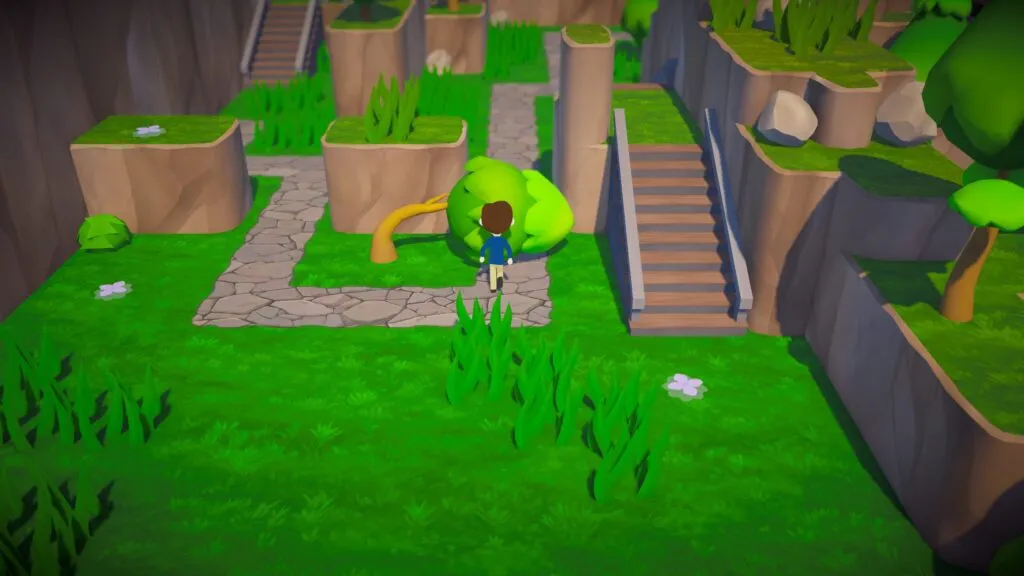
1. The Pre-Departure Ritual: Calibrating Your Stealth Profile
Before you even step foot outside your bunker, you have to understand that in this game, the trees "hear" through the ground. Every gram of weight in your inventory increases the seismic signature of your footsteps. Your first step in mastering foraging is weight-to-utility calibration.
The Minimalist Loadout
- Carbon-Fiber Scythe: High durability, zero metallic resonance.
- Scent-Masking Resin: Vital for bypassing the "Sniffer Vines."
- Vibration-Dampening Boots: Reduces your detection radius by 40%.
Success in the early game is determined by your ability to get in and out before the canopy closes. If you carry a heavy axe, you might as well ring a dinner bell for the Willow-Walkers. Stick to light, non-reactive tools that allow for quick movement and low environmental impact.
Analyzing the Biome Map
Before exiting, check the local spore density. High-density areas offer better loot but require a respirator that limits your field of vision. It's a trade-off that defines the "Trees Hate You" experience: risk versus biological reward.
2. Navigating the "Vibrational Net": Movement Mechanics
Once you are in the woods, the game shifts into a rhythm-based stealth simulator. The ground is a network of mycelium that reports your position to the nearest predatory trunk. To forage effectively, you must master the "Shift-Step" technique.
Timing Your Steps
- Wait for a gust of wind (audible through the rustling leaves).
- Move only while the trees are moving; their own noise masks your vibrations.
- Crouch immediately when the wind dies down.
Mycelium Dead Zones
Look for rocky outcrops or sandy patches. These surfaces do not conduct vibrations as efficiently as rich soil. Foraging near the base of a cliff might feel trapped, but it provides a "seismic shadow" where the trees have a harder time pinpointing your exact coordinates.
Pro-Tip: The Decoy Toss
You can craft "Vibration Stones" (Rock + Sap). Throwing one twenty meters away will draw the attention of the root-tentacles, giving you a 10-second window to harvest that rare Glow-Moss you’ve been eyeing.
3. The Art of the "Silent Snip": Harvesting Without Agitating
When you finally reach a resource node—let's say a cluster of Razor-Berries—your interaction method matters. If you spam the interact key, the plant will release distress pheromones. This triggers a localized "Aggro Zone" where branches will begin to whip at you.
Precision Harvesting
Instead of a "Hold to Harvest" mechanic, "Trees Hate You" utilizes a timing-based mini-game. You must clip the stem at the exact moment the plant's internal sap pressure is at its lowest. This is indicated by a subtle pulsing glow or a specific humming frequency.
Warning: Harvesting a plant while it is "Screaming" (high-frequency vibration) will reduce the quality of the item by 70% and likely trigger an ambush from a nearby Thistle-Knight.
Tool Maintenance
Always keep your shears sharpened. A dull blade requires more force, more force creates more friction, and friction creates heat. In this game, heat is an invitation for the "Cinder-Willows" to ignite the air around you.
4. Identifying "Sentinel Trees" and Their Blind Spots
Not every tree is a direct threat, but the Sentinel Trees act as the "cameras" of the forest. They are usually taller, with pale, eye-like knots in their bark. If you stand in their line of sight for more than three seconds, the entire grove goes into "Alert Mode."
Calculating the Sight Cone
The sight cone of a Sentinel is roughly 60 degrees. However, they rotate their "eyes" based on the sun's position. In the morning, they look East; in the evening, West. Foraging in the opposite direction of the sun is the safest way to avoid detection.
- Morning Foraging: Stick to the Western side of trunks.
- Noon Foraging: Stay directly under the canopy (Vertical Blind Spot).
- Dusk Foraging: Stick to the Eastern side of trunks.
Using Camouflage
Wearing "Leaf-Litter Ponchos" doesn't make you invisible, but it increases the time it takes for a Sentinel to lock onto you. If the "Detection Meter" (the pulsing vine on your UI) starts to turn red, break line of sight immediately by diving into a hollow log.
5. Extracting "Heart-Sap" Under Pressure
Heart-Sap is the most valuable resource in the game, required for high-tier crafting. It can only be found in the "Great Elders"—trees that are essentially mini-bosses. Foraging this isn't just a task; it's a heist.
The Extraction Process
You need to find the "pulse point" on the trunk. Use your stethoscope tool to listen for the thumping of the internal pump. Once found, you must insert a tap. This is where the game gets intense: as soon as the tap goes in, the tree will begin to shake, dropping heavy "Spore-Pods" on your head.
Managing the Extraction Rate
- Slow Extraction: Takes 2 minutes, low risk of tree awakening.
- Fast Extraction: Takes 30 seconds, high risk of immediate branch-slam attack.
If you are solo, always go for the slow extraction. If you are playing co-op, have one player distract the surrounding "Lesser Vines" with a torch while the other manages the sap flow.
6. Weather Patterns and Foraging Efficiency
The weather in "Trees Hate You" isn't just cosmetic; it changes the chemistry of the forest. Rain, for instance, is a double-edged sword. It masks your scent and footsteps, but it also makes the trees more "active" and aggressive due to the influx of nutrients.
Foraging in the Rain
During a storm, the Acid-Oak becomes incredibly volatile. However, the Static-Ferns are grounded by the water, making them safe to harvest for the first time. This is the only window you have to collect "Lightning-Charged Fiber."
The Fog Factor
Fog is your best friend for foraging rare fungi. The "Spore-Cap" mushrooms only bloom when the humidity is above 90%. While the visibility is low for you, it is also low for the Sentinels. Use your "Bio-Sonar" to navigate the whiteout.
7. Post-Forage Decontamination: The Walk Back
The most common way players die is not while foraging, but on the way back to base. Once you have harvested materials, you are "marked" by the forest's pheromones. You are essentially a walking beacon of "Theft."
The Pheromone Trail
Your inventory now contains "Agitated Matter." This leaves a trail that the "Tracker Roots" can follow. To counter this, you must pass through a water source (a stream or pond) to wash off the scent. If you go straight back to your base, you will lead a "Forest Raid" right to your front door.
Tactical Retreat Steps:
- Zig-Zag: Never walk in a straight line; it makes the root-tracking AI struggle.
- Mud-Masking: Coat yourself in mud to lower your thermal signature.
- Baiting: Drop a low-value resource (like a common twig) to distract smaller predators.
8. Specialized Tools for Advanced Botanists
As you progress, your basic scythe won't cut it. You will need to craft specialized equipment that interacts with the tree's unique biology. The Cryo-Chisel and the Sonic-Pulser are game-changers for high-tier foraging.
The Cryo-Chisel
This tool allows you to "freeze" a small section of a tree's nervous system. This prevents it from sending a signal to the rest of the grove. It’s expensive to fuel, but it’s the only way to harvest "Ancient Amber" without starting a regional war.
The Sonic-Pulser
This gadget emits a frequency that mimics the sound of a "Wood-Pecker Drone" (a natural predator of the trees). It causes nearby branches to retract in fear, creating a temporary safe zone for you to work in.
9. Understanding the "Forest Hive-Mind" Level
There is a hidden stat in the game: Regional Agitation. Every time you forage, the forest’s collective anger increases. If you over-harvest in one area, the trees will eventually "Blacklist" you, causing roots to erupt from the ground the moment you enter that biome.
Managing Agitation
To lower the agitation level, you must "Give Back." This involves planting "Purified Seeds" or clearing out invasive "Rust-Fungi" that the trees themselves cannot get rid of. It’s a delicate ecosystem balance.
The Blacklist Signs
- Tier 1: Leaves turn a dark shade of purple.
- Tier 2: Birds stop singing in the area.
- Tier 3: The trees begin to physically shift their positions to block paths.
If you hit Tier 3, leave the area for at least three in-game days. If you stay, the "Great Heart" will send a Forest Guardian to eliminate you.
10. Conclusion: Respect the Canopy or Become the Soil
Mastering resource foraging in "Trees Hate You" requires a shift in mindset. You are not the master of this world; you are a parasite trying to survive a very angry host. By understanding the vibrational mechanics, the visual limits of the Sentinels, and the importance of pheromone management, you can strip the forest of its treasures without losing your life.
Remember, the trees aren't just background assets; they are AI-driven entities with memory and intent. Treat every harvest like a surgical strike. Get in, get what you need, and for heaven's sake, don't touch the "Red Bark" unless you’re ready to run for your life. Happy foraging, and try not to get turned into mulch.